



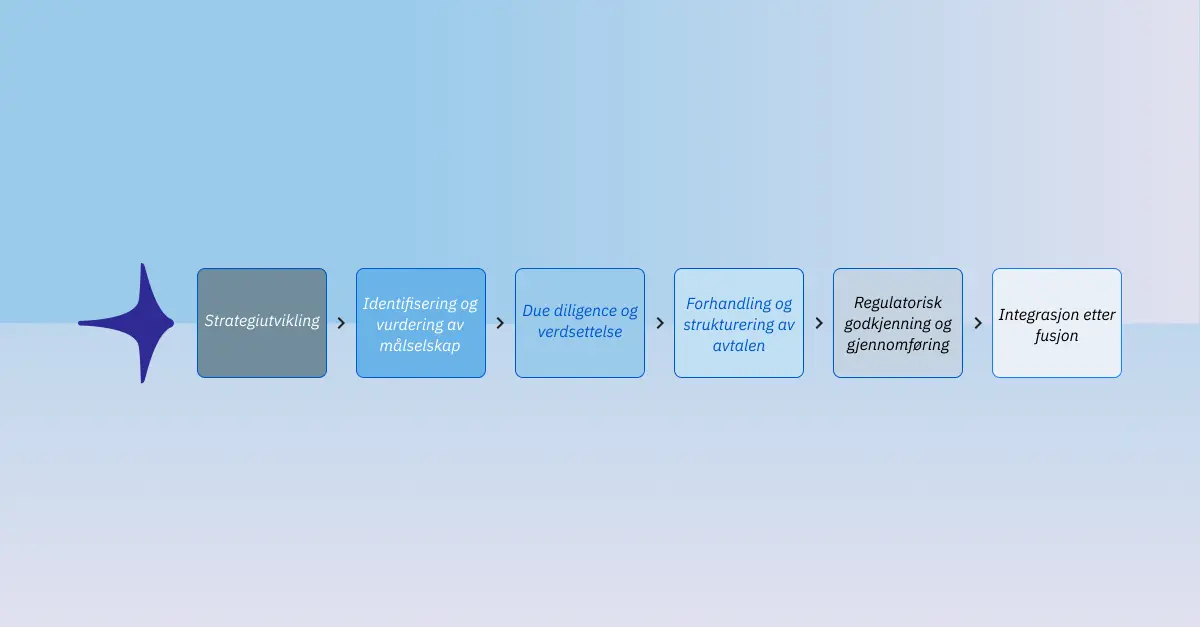
Mergers and acquisitions (M&A) represent one of the most powerful strategies for companies seeking growth, market expansion, or competitive advantage. However, the success of any transaction depends on careful planning, disciplined execution, and effective integration. The M&A process typically unfolds across six distinct stages, each with its own objectives, challenges, and critical decisions.
1. Strategy Development
Every successful M&A begins with a clear strategic purpose. In this stage, the acquiring company defines its goals. Whether to expand into new markets, acquire new technologies, achieve economies of scale, or eliminate competition.
Leaders outline the investment thesis, establish selection criteria (such as target size, geography, and industry), and align stakeholders on the overall rationale for pursuing a deal. This stage ensures that the M&A effort supports the company’s broader corporate strategy rather than becoming a standalone financial transaction.
2. Target Identification and Screening
Once the strategic direction is set, the next step is to identify and evaluate potential targets that align with the defined objectives. In this context, the Target refers to the company, business unit, or set of assets being sold as part of a potential transaction. This involves market research, industry benchmarking, and outreach to potential targets through advisors or direct engagement. Companies assess preliminary fit based on factors such as market position, financial performance, cultural compatibility, and strategic synergies. The goal is to create a shortlist of viable candidates for deeper evaluation.
3. Due Diligence and Valuation
Due diligence is the most analytical and detailed phase of the M&A lifecycle. Here, the acquiring company examines every aspect of the target’s operations to verify assumptions and uncover potential risks. This includes financial, legal, operational, tax, IT, and human resource reviews. Parallel to this, valuation experts estimate the fair market value of the target using approaches such as discounted cash flow (DCF), comparable company analysis, and precedent transactions. Findings from this stage often determine whether the deal moves forward or needs to be renegotiated.
4. Deal Negotiation and Structuring
Once due diligence confirms the viability of the transaction, attention turns to negotiation and structuring. Both parties work to agree on key terms such as price, payment method (cash, stock, or hybrid), and governance arrangements.
Prior to this phase, a Letter of Intent (LOI) or Memorandum of Understanding (MOU) is typically already signed, formalizing the preliminary terms of the transaction and providing the basis for detailed due diligence.
Following negotiations, the definitive agreements are drafted, specifying all final terms and conditions of the deal. This stage requires close collaboration among legal, financial, and strategic advisors to balance risk and ensure favorable terms.
5. Regulatory Approval and Closing
With the deal terms in place, the transaction moves into the regulatory and execution phase. Depending on the industry and jurisdiction, regulatory bodies may review the deal for compliance with antitrust, competition, or foreign investment laws.
At the same time, financing arrangements are finalized, and shareholder or board approvals are secured. Once all conditions are met, the deal is formally closed, and ownership of the target is transferred to the acquiring entity.
6. Post-Merger Integration (PMI)
Closing the deal is only the beginning. The true success of an M&A lies in effective post-merger integration (PMI). The process of unifying operations, systems, people, and cultures. This phase focuses on realizing the synergies identified earlier in the process, whether through cost savings, enhanced innovation, or expanded market reach.
Strong communication, cultural alignment, and clear integration planning are vital to minimize disruption and achieve the intended strategic value.